


Embedded operator HMI for industrial laser marking systems, with a purpose-built protocol driver for direct laser control.
Industry: Machinery and OEM (Laser Marking)
Quick Facts
Attribute | Value |
|---|---|
Customer | SIC Marking (OEM Partner) |
Product | FrameworX 10.1.5 |
Markets | Canada, United States, and France |
Focus | Laser marking and part traceability |
Laser Controller | SCAPS USC card, driven through SAMLight |
Integration | Custom protocol driver over TCP |
The Challenge
Challenge: Replace the laser marking operator interface with a modern HMI that controls the laser directly, without device logic scattered through the application.
Specific pain points:
Laser configuration was reachable only through the marking software's own interface, which was never designed for a production operator
Marking content, barcode symbology, counters and date fields had to be changed per part without opening an engineering tool
Marking parameters such as power, speed, frequency and delays are held per pen and needed operator-level exposure
An earlier prototype drove the laser from application scripts, which spread device behaviour across the solution and made it difficult to support
Impact: Longer operator training, slower changeovers between parts, and more marking errors, all caused by an interface that was not built for production use.
The Solution
Architecture
Component | Implementation |
|---|---|
Base Platform | FrameworX 10.1.5 |
Laser Driver | Custom protocol driver communicating over TCP |
Operator HMI | Three purpose-built screens: Setup, Job Editor, and Pens |
Pen Library | Dataset of material and parameter presets |
Job Preview | Live render of the marking layout inside the display |
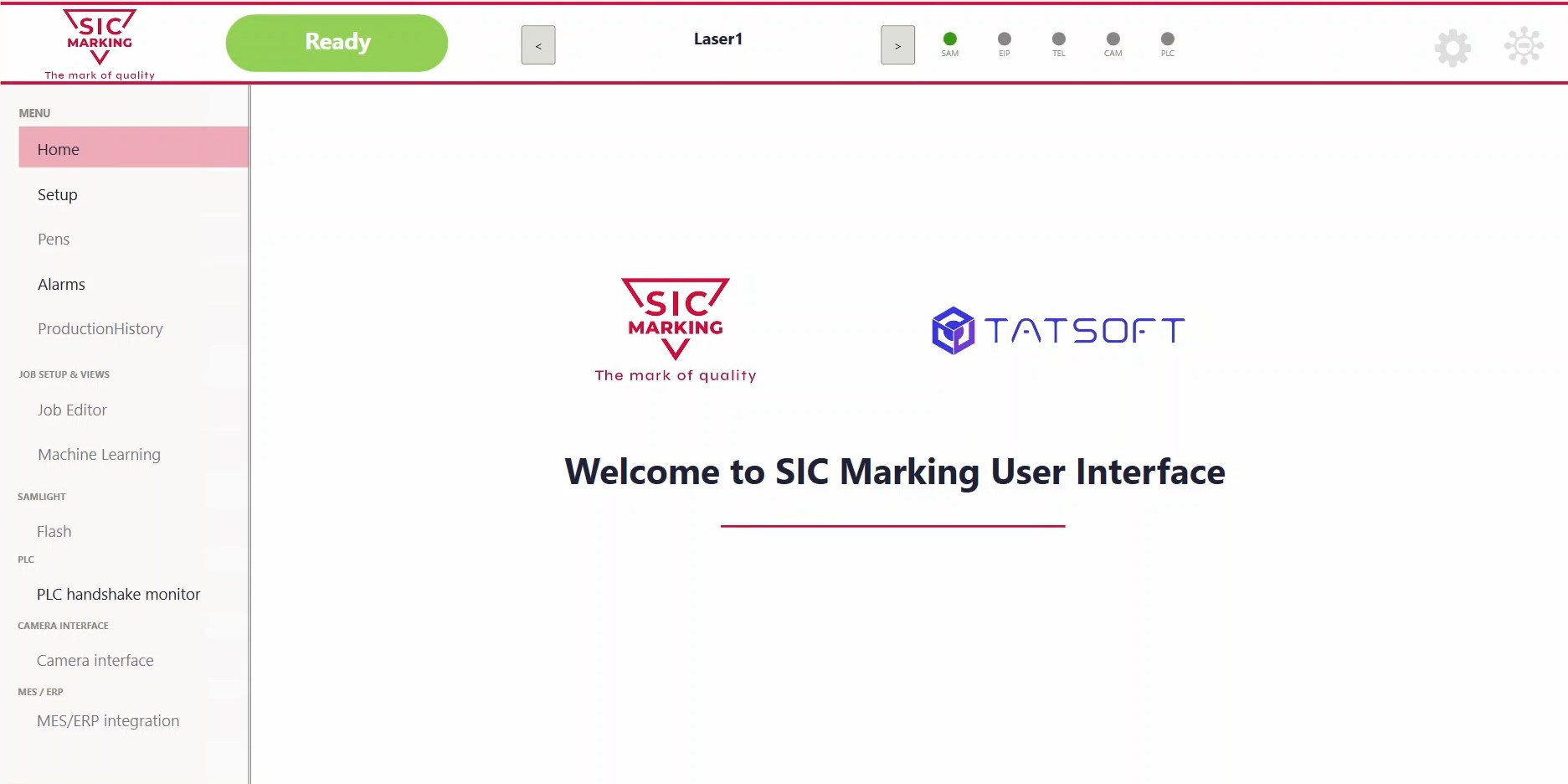
Main Screen
Initial display.
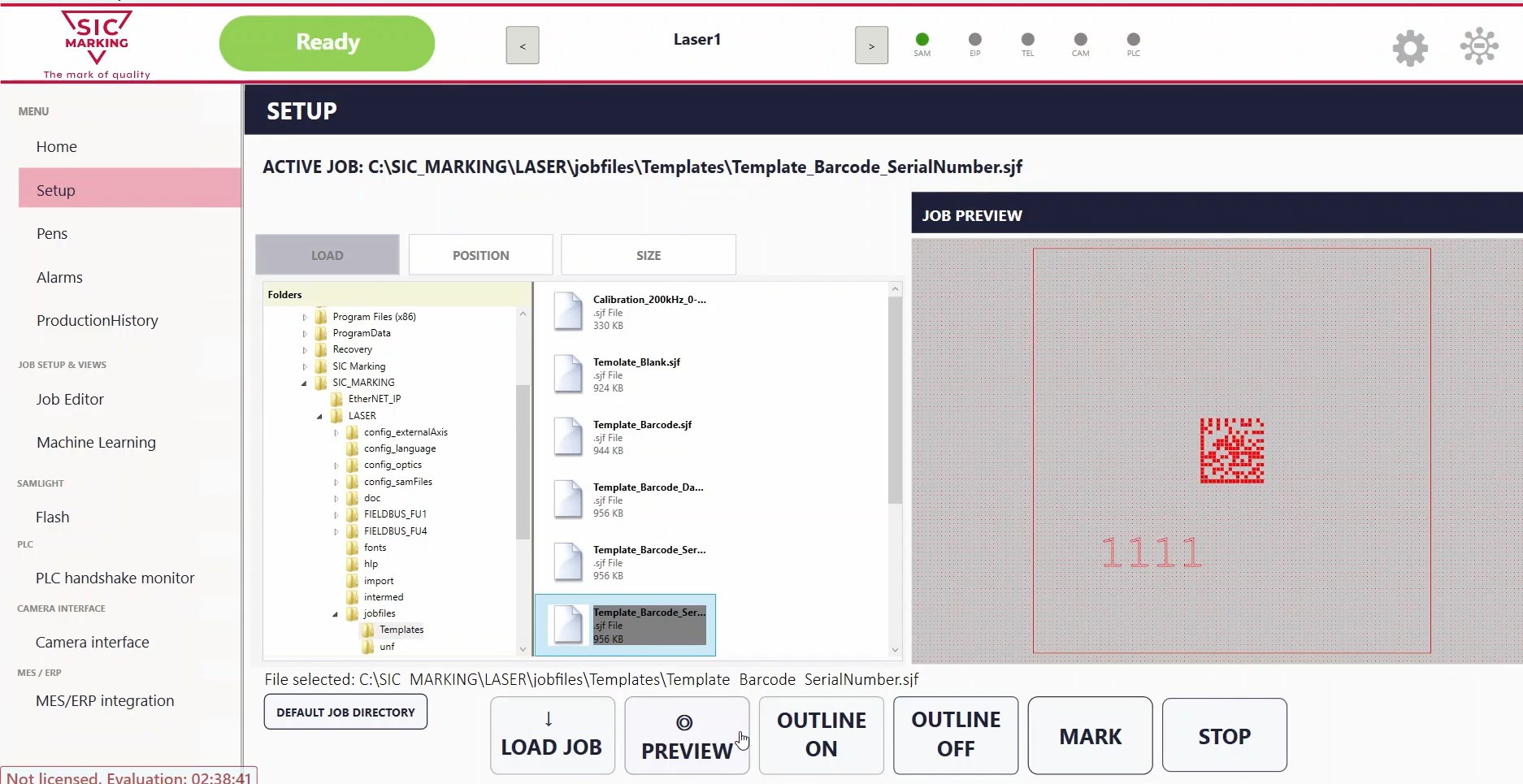
Setup Screen
The production screen. The operator selects the job, adjusts the position and size of the mark, and runs the marking cycle.
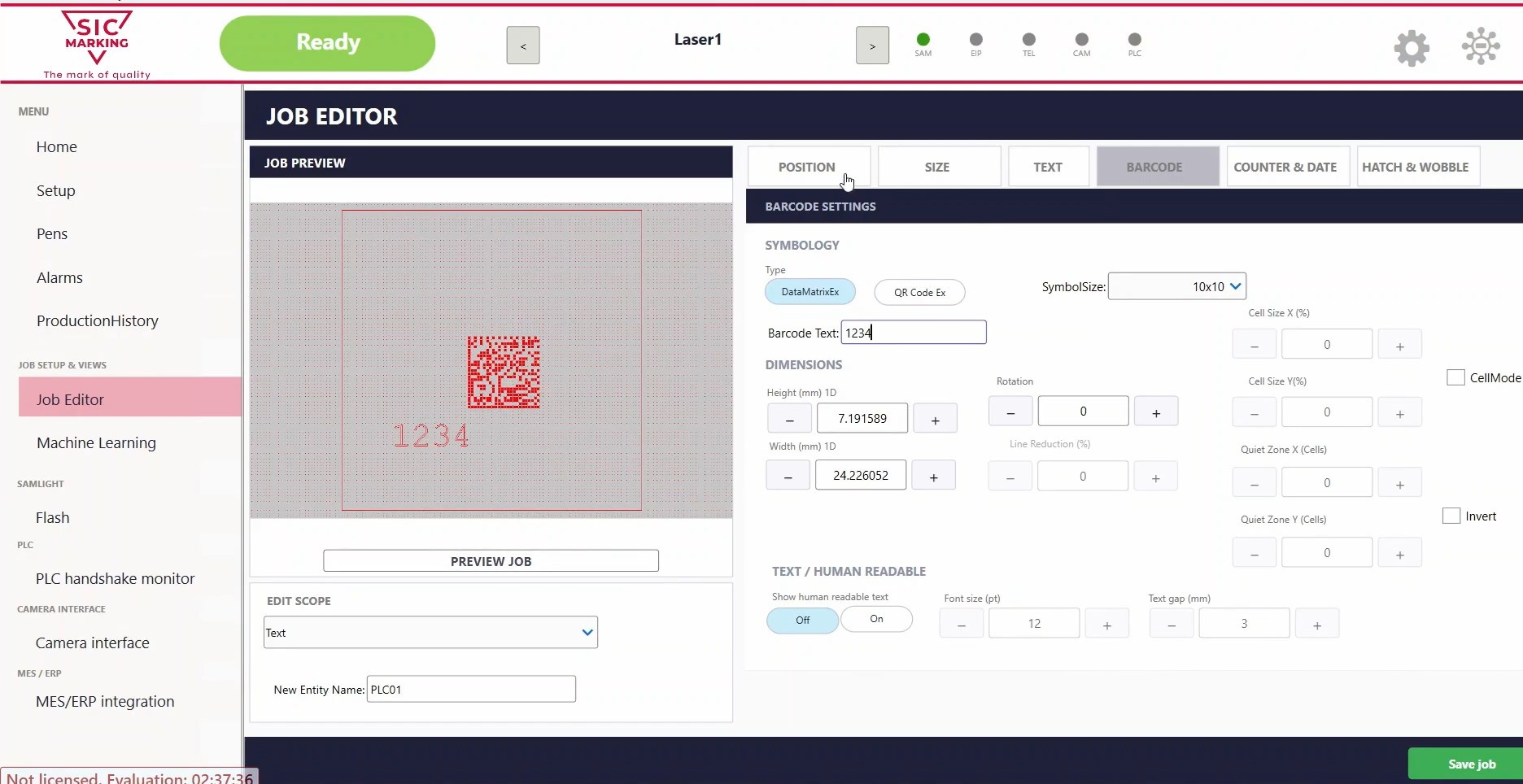
Job Editor
Editing the content of the loaded job: text, barcode position, and the parameters of each object in the job.
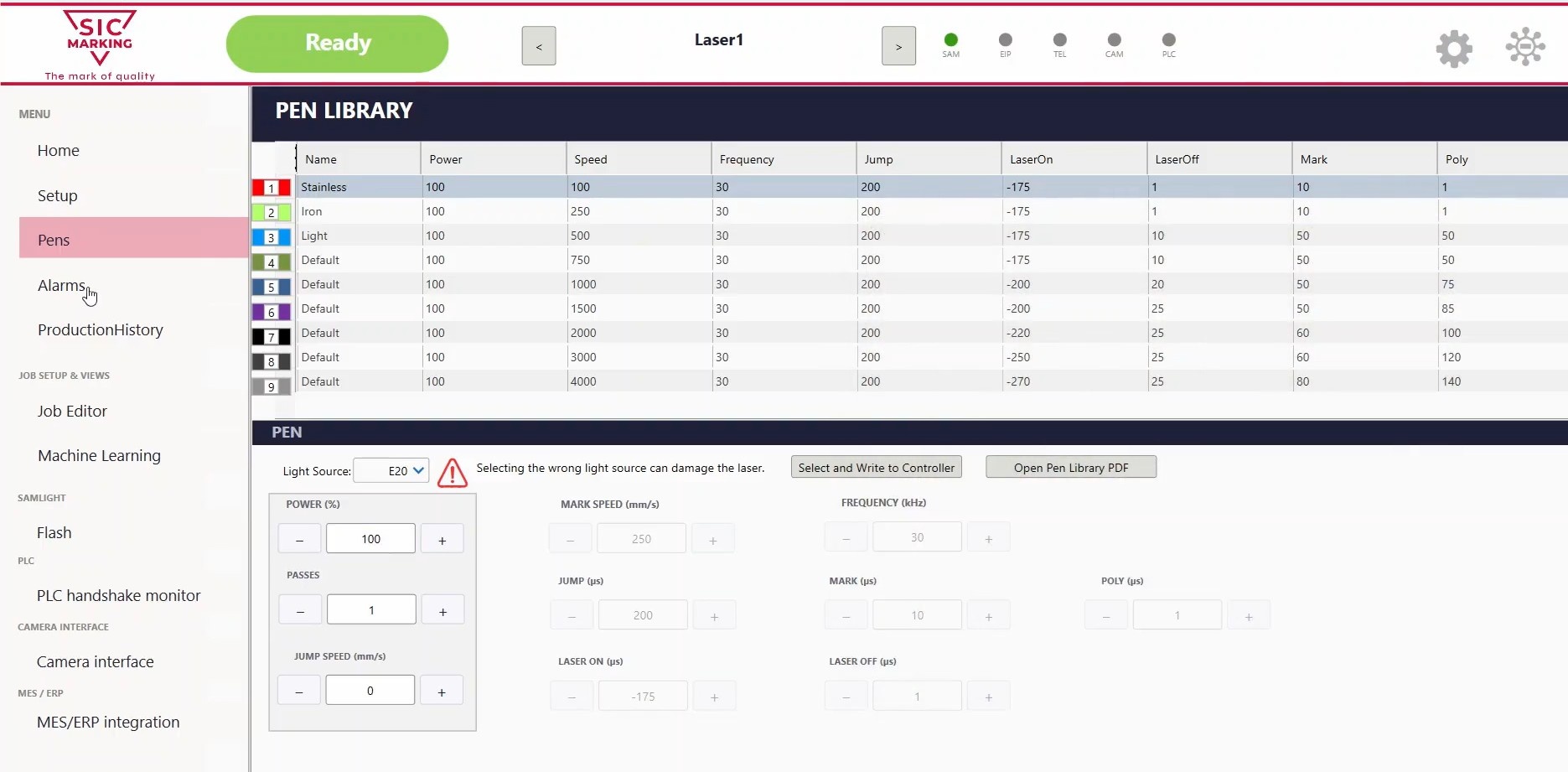
Pens
Marking parameters held per pen, including power, speed, frequency, and the jump, mark and laser delays. A dataset of presets lets an operator recall known-good settings per material.
Marking Control
Text, barcode, DataMatrix, QR, counter and date/time objects
Symbology, cell size, quiet zone, error correction and human-readable text
Serial number format, step, start value, reset and beat count
Per-pen power, speed, frequency, and jump, mark and laser delays
Whole-mark position, rotation and size applied through the optic, without altering the job itself
Device Integration
Every laser operation goes through a single protocol driver. Nothing in the application talks to the laser directly, which keeps all device behaviour in one supported component.
Capability | Detail |
|---|---|
Structured Addressing | One scheme covering selection, values, per-object data, flags, commands and status |
Guide Pointer | The outline retraces automatically when the mark geometry changes |
Flash Jobs | Store and load jobs held in the controller's flash memory |
Job Preview | Captures the marking layout and renders it in the operator screen |
Key Enablers
Platform capabilities that made this solution possible:
Capability | Application |
|---|---|
Driver Toolkit | Purpose-built driver for the laser controller |
Unified Namespace | Laser configuration exposed as a structured tag model |
Display Engine | Operator screens with live preview rendering |
Datasets | Pen library of material presets |
Access Types | On-demand polling, so only the screen in use communicates with the laser |
The Results
Single Integration Point — all laser communication through one driver, with no device logic in the application
Operator-Level Control — marking content and parameters changed from the HMI, with no engineering tool
Shorter Training — three focused screens in place of a general-purpose engineering interface
Faster Changeovers — job selection, content and position adjusted directly from the production screen
Fewer Marking Errors — the operator sees a live preview of the layout before running the cycle
Reusable — the driver serves any laser using the same controller software, not a single machine
Maintainable — device behaviour documented and versioned in one component
This case demonstrates an embedded OEM machine HMI with a custom protocol driver for direct laser control.
In this section...